Everything About Quality School: Crucial Realities and Enriching Experiences for Youthful Learners
Elementary school plays a pivotal function in shaping young students' futures. It encompasses vital scholastic subjects and nurtures social skills via organized interactions. Furthermore, after-school activities offer chances for imagination and team effort. Adult participation further boosts this structure, supporting children in their academic trips. As these elements link, they create a thorough academic experience. However, what details approaches can parents and instructors employ to maximize this advancement?
Understanding the Elementary School Educational Program
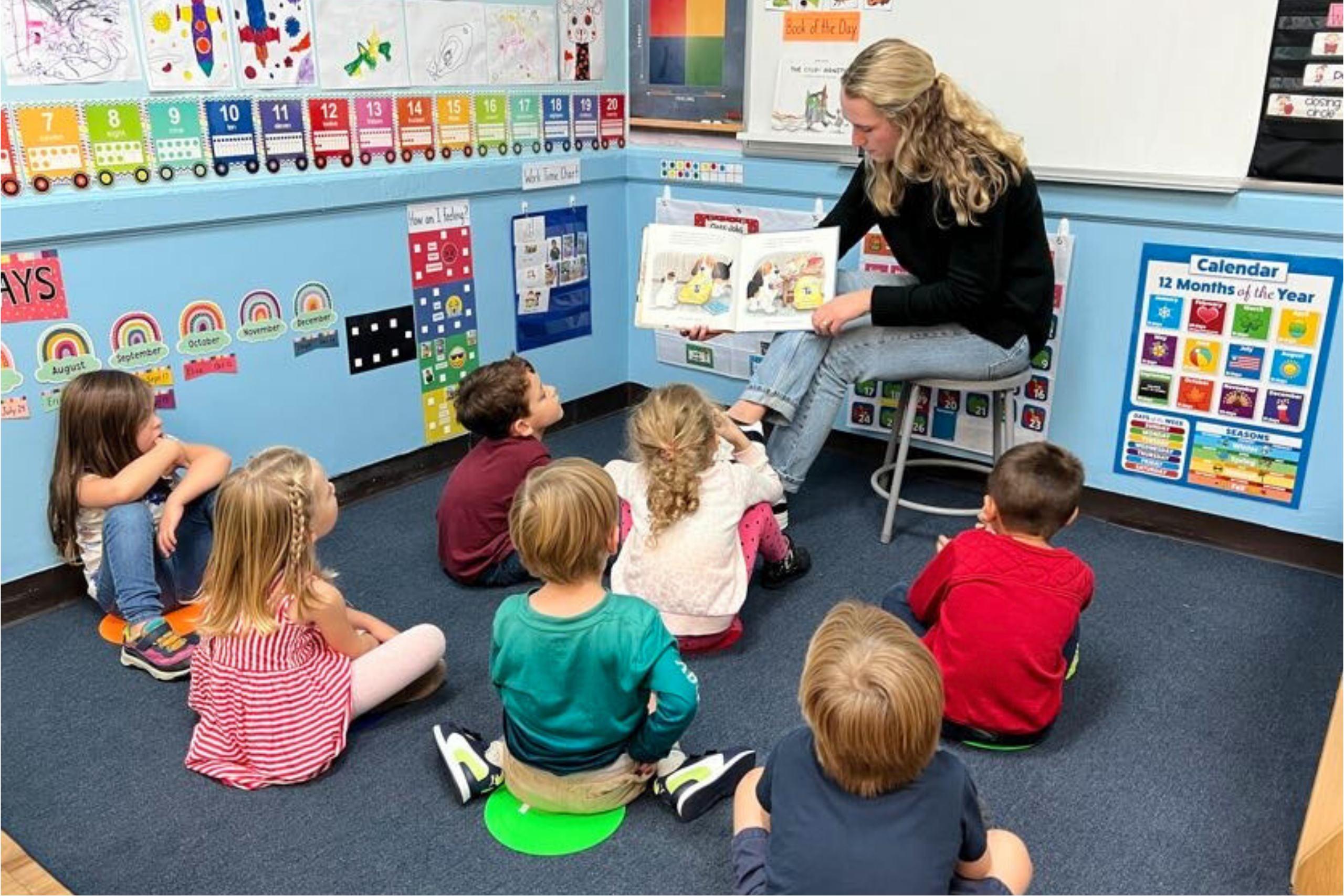
As students commence their elementary school journey, they run into an educational program made to construct fundamental skills and understanding across various topics. This curriculum normally includes core locations such as mathematics, language arts, scientific research, and social studies. Each topic is structured to cultivate important reasoning, imagination, and problem-solving capabilities, essential for future scholastic success.
Language arts concentrate on reading, creating, and communication skills, promoting pupils' capacity to share themselves plainly. Math introduces basic principles, consisting of addition, reduction, and later, multiplication and division, laying the groundwork for much more complex analytical. Scientific research motivates questions and expedition, stiring up interest about the environment, while social researches imparts an understanding of community and multiculturalism.
In addition to core subjects, the educational program often consists of arts and physical education and learning, offering a well-rounded instructional experience that advertises both intellectual and physical development. Quality school offers as a crucial platform for long-lasting learning.
The Structure of Grade Institution Education
While quality school education and learning differs by area and establishment, it generally complies with an organized structure that advertises modern knowing. Commonly, quality college incorporates an array of qualities, commonly from preschool with sixth or 5th quality, depending upon the educational system. Each grade level represents certain developmental milestones, with curricula made to build on previous understanding.
Courses are usually arranged into core topics, consisting of mathematics, language arts, scientific research, and social studies, guaranteeing that students get a versatile education. Instruction usually incorporates direct mentor with hands-on activities, fostering interaction and important thinking.
Assessment techniques differ but normally consist of quizzes, jobs, and tests to review pupil understanding. Furthermore, teachers typically work together to develop interdisciplinary devices, enhancing the learning experience. Overall, the structure of grade school education aims to grow fundamental skills, prepare students for future scholastic difficulties, and advertise a love for discovering that prolongs past the classroom.
Social Abilities Growth in Early Learners
Elementary school education and learning not just concentrates on academic skills but additionally plays a significant function in the advancement of social skills amongst very early students. During these formative years, kids involve in numerous activities that urge interaction, partnership, and interaction with peers. Group jobs and cooperative learning settings supply opportunities for kids to exercise sharing, negotiating, and resolving problems.
Organized playtime promotes necessary abilities like compassion and understanding, as youngsters find out to acknowledge and react to the feelings of others. Via guided social interactions, teachers aid students develop vital listening and conversational content abilities. As kids browse relationships and group dynamics, they gain confidence in their social capabilities.
The Function of Extracurricular Tasks
After-school activities play a considerable duty in enhancing the instructional experience of grade college students by offering methods for personal growth past the classroom. These tasks enable pupils to discover talents and rate of interests, promoting imagination and self-expression. Engagement in sports, songs, art, and clubs grows team effort, management abilities, and a sense of belonging.
Moreover, participating in such activities advertises physical health and wellness and health, encouraging students to preserve an energetic lifestyle. Grade School. why not find out more Extracurricular programs also function as a system for students to develop relationships and create social abilities, which are important for their general advancement
As trainees navigate their interests beyond academics, they acquire useful experiences that add to their confidence and durability. Inevitably, these tasks play a critical function fit well-rounded people, preparing them for future obstacles both in and out of the classroom.
Sustaining Learning With Adult Participation
Adult involvement considerably boosts the educational journey of quality college students, as it promotes an encouraging setting that strengthens knowing. Engaged parents add to their youngsters's scholastic success by attending school occasions, assisting with homework, and maintaining open interaction with teachers. Kindergarten. This involvement not just enhances trainees' motivation but also grows a sense of belonging and self-esteem
Study suggests that youngsters whose moms and dads are actively entailed have a tendency to have higher grades, better attendance, and enhanced behavior in college. Furthermore, adult engagement encourages the growth of crucial life abilities, such as time administration and obligation.
Institutions can facilitate this involvement by organizing workshops, supplying sources, and encouraging regular responses. By developing partnerships in between parents and educators, quality institutions can assure a comprehensive technique to trainee growth. Inevitably, adult involvement offers as a foundation for fostering a favorable educational experience, profiting both students and the college community as a whole.
Frequently Asked Concerns
What Are the Typical Elementary School Hours for Trainees?
Regular grade school hours for trainees usually vary from 8:00 AM to 3:00 PM, differing by area. Many schools incorporate a lunch break and recess, ensuring students have time to charge throughout the day.
Just How Do Grade Schools Address Diverse Knowing Needs?
Grade colleges deal visit their website with varied discovering needs with distinguished instruction, customized lesson strategies, and assistance services, ensuring all pupils receive proper sources. Teachers collaborate with professionals to develop comprehensive settings that foster private development and involvement.
What Is the Role of Innovation in Elementary School Education And Learning?
Innovation in grade institution education and learning boosts discovering through interactive tools, customized learning experiences, and access to substantial resources. It fosters collaboration among trainees and educators, preparing kids for a technology-driven future while sustaining varied instructional demands.
How Can Parents Aid With Research Efficiently?
Parents can assist with research properly by creating a structured setting, urging independence, providing resources, and providing support without directly giving solutions. Interaction with educators additionally boosts understanding of assumptions and advertises scholastic success.
What Prevail Challenges Faced by Quality College Pupils?
Usual difficulties encountered by elementary school trainees include trouble with time monitoring, understanding intricate ideas, maintaining focus throughout lessons, maneuvering social characteristics, and balancing scholastic responsibilities with after-school activities, all of which can impact their overall efficiency.
As trainees commence their grade institution trip, they run into an educational program designed to construct foundational abilities and expertise across various topics. Typically, quality college encompasses a range of qualities, frequently from preschool via 5th or 6th grade, depending on the instructional system. Extracurricular activities play a significant function in boosting the instructional experience of grade college students by offering opportunities for personal development past the class. Adult involvement substantially enhances the educational journey of grade school students, as it promotes a supportive atmosphere that enhances understanding. By producing collaborations in between parents and instructors, quality institutions can assure a thorough method to student advancement.